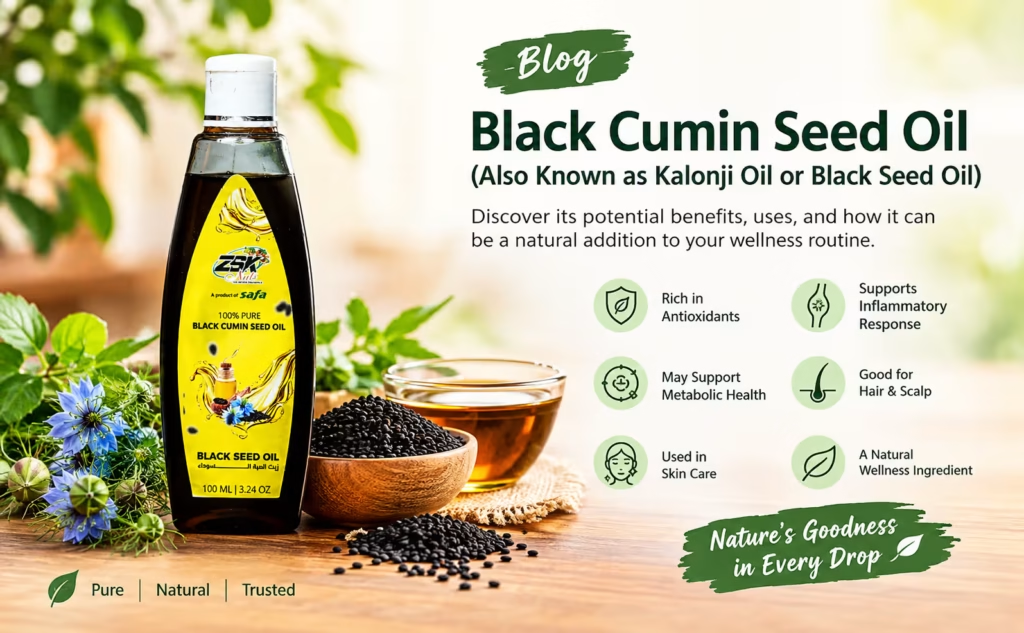
Black cumin seed oil, commonly known as Kalonji oil or Black Seed oil, is a traditional plant-based oil made from the seeds of Nigella sativa. It has been used for generations in traditional wellness practices and is now gaining popularity among people looking for natural ingredients to complement a healthy lifestyle.
From its distinctive taste and aroma to its naturally occurring compounds, black seed oil has become a popular addition to wellness routines. In this guide, we’ll explore what black cumin seed oil is, its potential benefits, how to use it, nutritional properties, and important considerations before using it.
What Is Black Cumin Seed Oil?
Black cumin seed oil is extracted from the small black seeds of the Nigella sativa plant. The seeds are also commonly called black cumin, black seed, kalonji, black caraway, or Nigella seeds, depending on the region.
The oil naturally contains various bioactive compounds, including thymoquinone, which is one of the compounds most frequently studied in black seed research.
Unlike common cooking oils, black seed oil is often consumed in small quantities or used as part of traditional wellness and personal-care routines.
Black Cumin Seed Oil, Kalonji Oil and Black Seed Oil: Are They the Same?
Yes. In most commercial and traditional contexts, these names refer to oil derived from Nigella sativa seeds.
You may find it marketed under names such as:
Black cumin seed oil
Black seed oil
Kalonji oil
Kalonji seed oil
Nigella sativa oil
Black caraway seed oil
Black cumin oil
However, “black cumin” can sometimes refer to other plants or seeds, so checking the botanical name (Nigella sativa) on the product label is useful when buying black seed oil.
Potential Benefits of Black Seed Oil
Black seed oil has attracted scientific interest because of its naturally occurring compounds. However, research on its health effects is still developing, and it should not be considered a replacement for medical treatment.
Black seed oil contains compounds with antioxidant activity, particularly thymoquinone.
Antioxidants help protect cells from oxidative stress caused by unstable molecules known as free radicals. Including a variety of plant-based foods and oils in a balanced diet can contribute to overall nutritional health.
2. Traditionally Used for General Wellness
Kalonji has a long history of traditional use in different cultures. Black seed oil is commonly included in wellness routines as a natural plant-derived ingredient.
Its traditional uses include dietary consumption and topical application, although traditional use does not by itself establish a medical benefit.
3. May Support a Healthy Inflammatory Response
Laboratory and human research has investigated compounds in Nigella sativa for their potential effects on inflammatory pathways.
Some studies have reported changes in inflammatory markers, but more high-quality research is needed to determine how meaningful these effects are in everyday use.
4. May Support Metabolic Health
Research has explored Nigella sativa and its preparations in relation to blood glucose and blood lipid levels.
Some clinical studies have reported potentially beneficial changes, but results vary between studies. Black seed oil should therefore be viewed as a dietary supplement rather than a treatment for diabetes or high cholesterol.
5. Popular in Traditional Hair and Scalp Care
Kalonji oil is widely used in traditional hair-care routines. People commonly massage small amounts into the scalp or apply it to the hair.
The oil can help provide conditioning and may make hair feel smoother. However, claims that black seed oil can definitely regrow hair or cure hair loss require stronger clinical evidence.
6. Used in Traditional Skin Care
Black seed oil is also used topically as part of natural skin-care routines.
Its plant compounds and fatty acids make it an interesting ingredient for moisturizing and conditioning formulations. Because some people may experience irritation, it is sensible to perform a small patch test before applying it more widely.
What Makes Black Seed Oil Special?
One of the most studied components of Nigella sativa is thymoquinone.
Thymoquinone has been investigated extensively in laboratory and preclinical research for antioxidant, anti-inflammatory and other biological activities.
However, laboratory findings should not automatically be interpreted as proven health benefits in humans. The amount of thymoquinone and other compounds can also vary depending on the seeds, extraction method and processing of the oil.
How to Use Black Cumin Seed Oil
The appropriate way to use black seed oil depends on the product and whether it is intended for dietary or topical use.
For Dietary Use
If the product is specifically labeled for oral consumption, follow the manufacturer’s serving instructions.
Black seed oil has a strong, distinctive flavor, so some people prefer taking it with food.
For Hair and Scalp
For topical use:
Take a small amount of black seed oil.
Apply it gently to the scalp or hair.
Massage lightly.
Leave it on for the period recommended by the product instructions.
Wash thoroughly if needed.
Avoid getting the oil into your eyes.
For Skin
Apply a small amount to a clean area of skin. If you have sensitive skin, test a small area first and discontinue use if irritation occurs.
How to Choose Good Quality Black Seed Oil
When buying Kalonji oil or black seed oil, consider the following factors:
1. Check the Botanical Name
Look for Nigella sativa on the packaging.
2. Check the Extraction Method
Products may be produced using different extraction and processing methods. If you specifically want cold-pressed oil, check that the label clearly states this.
3. Look at the Ingredients
A quality product should clearly state what is inside the bottle. If you’re looking for pure black seed oil, check whether additional oils or ingredients have been added.
4. Choose Appropriate Packaging
Dark or opaque packaging can help protect oils from light exposure. Always store the oil according to the manufacturer’s instructions.
5. Check Manufacturing and Expiry Information
Look for batch information, manufacturing details, expiry or best-before dates and appropriate storage instructions.
Black Seed Oil vs Kalonji Oil
There is generally no meaningful difference between black seed oil and Kalonji oil when both are made from Nigella sativa seeds.
Name
Common Meaning
Black Seed Oil
Oil made from Nigella sativa
Kalonji Oil
Common Indian/South Asian name
Black Cumin Seed Oil
Another commonly used name
Nigella Sativa Oil
Botanical/product name
Black Caraway Oil
Another traditional name
Always check the botanical name because common names can vary between regions.
Black Seed Oil for Hair: What Does Research Say?
Black seed oil has become popular as a natural hair-care ingredient. It is traditionally used to massage the scalp and condition hair.
Some research has investigated Nigella sativa preparations for hair-related conditions, but the available evidence is not strong enough to conclude that black seed oil reliably treats hair loss or stimulates significant hair growth.
For persistent or sudden hair loss, identifying the underlying cause with a healthcare professional is more appropriate than relying solely on oils or supplements.
Black Seed Oil for Skin
Black seed oil is used in traditional and cosmetic skin-care products.
Its fatty acids and plant compounds can make it useful as a conditioning ingredient. However, concentrated oils may irritate some individuals.
If you’re using black seed oil on your face or body for the first time, perform a patch test on a small area before applying it more broadly.
How to Store Black Seed Oil
Proper storage can help maintain the quality of the oil.
Keep the bottle tightly closed.
Store it away from direct sunlight.
Avoid excessive heat.
Follow the storage instructions on the product label.
Use clean hands or utensils when handling the oil.
Check the smell and appearance if the product has been stored for a long time.
Are There Any Precautions?
Black seed oil is generally used as a food or topical ingredient, but “natural” does not automatically mean risk-free.
People who are pregnant, breastfeeding, taking regular medications, preparing for surgery, or managing a medical condition should consult a qualified healthcare professional before using concentrated black seed oil as a supplement.
Topical use may cause irritation or allergic reactions in some people. Stop using it if you develop significant redness, itching, swelling or other concerning symptoms.
Black seed oil should not be used as a substitute for prescribed medicines or professional medical care.
Frequently Asked Questions About Black Cumin Seed Oil
Is black cumin seed oil the same as Kalonji oil?
Yes. When both products are made from Nigella sativa, black cumin seed oil and Kalonji oil refer to the same type of oil.
What is black seed oil used for?
Black seed oil is traditionally used for dietary wellness, hair care, scalp massage and skin care. Scientific research has investigated several potential biological effects, but evidence for specific medical benefits varies.
Can black seed oil be used on hair?
Yes, black seed oil is commonly used as a hair and scalp oil. It can be used as part of a conditioning or scalp-massage routine.
Can I consume black seed oil?
Only consume a product that is specifically labeled as suitable for oral consumption, and follow its recommended serving instructions.
Does black seed oil contain thymoquinone?
Yes. Thymoquinone is one of the characteristic bioactive compounds found in Nigella sativa seed oil.
What does Kalonji oil taste like?
Kalonji oil typically has a strong, distinctive, slightly bitter and spicy flavor.
How should black seed oil be stored?
Keep it tightly closed and protected from heat and direct sunlight. Follow the storage instructions provided by the manufacturer.
Final Thoughts
Black cumin seed oil, Kalonji oil and Black Seed oil are commonly used names for oil derived from Nigella sativa. The oil contains naturally occurring compounds such as thymoquinone and has a long history of traditional use.
Today, it is popular in natural wellness, hair care and skin-care routines. Scientific research has explored its antioxidant, inflammatory and metabolic effects, but more research is needed before many health claims can be considered firmly established.
If you choose to use black seed oil, select a clearly labeled Nigella sativa product, follow the manufacturer’s directions and use it as part of a balanced, healthy lifestyle rather than as a replacement for medical treatment.